Article: Understanding the 4Cs: A Plain Guide to Diamond Quality
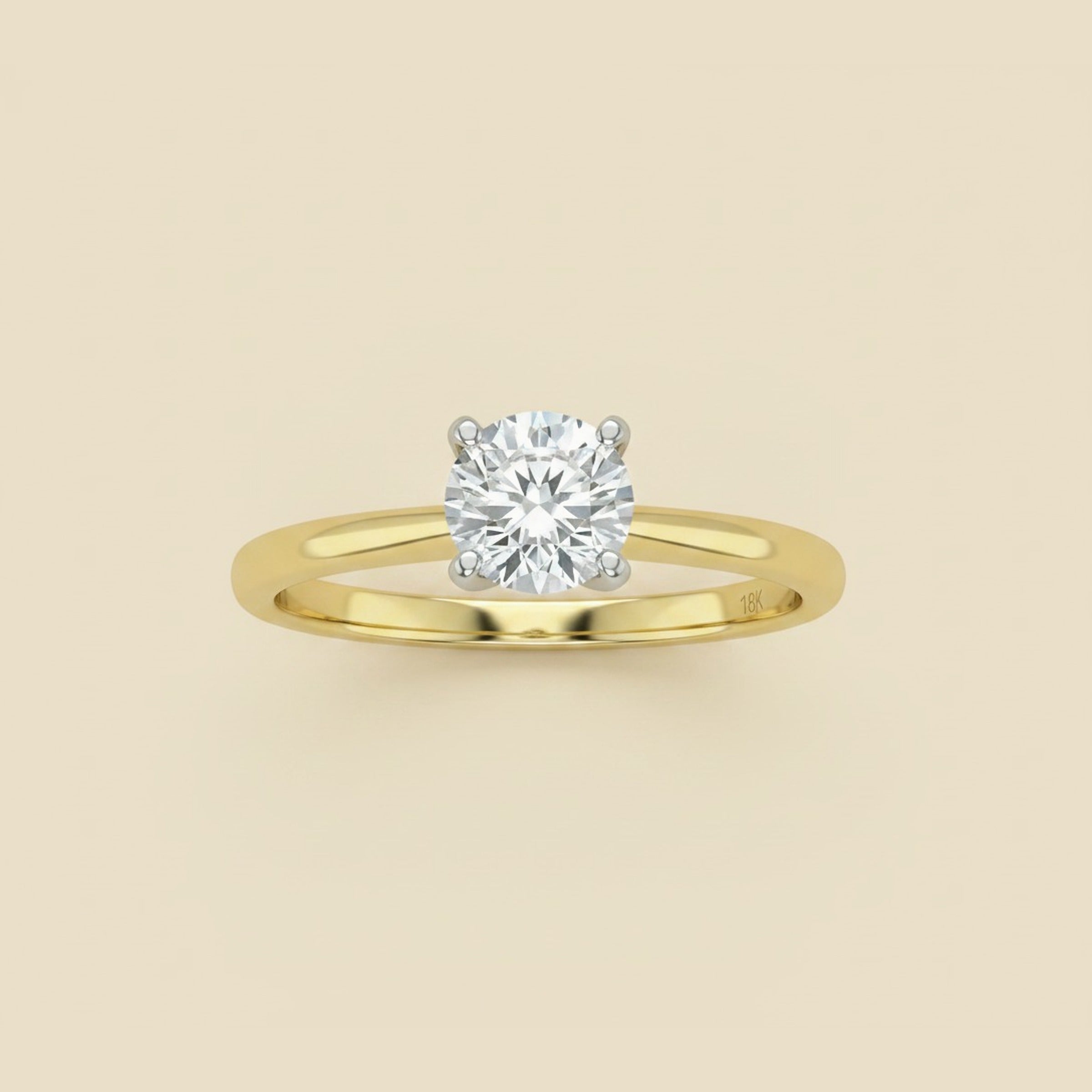
Understanding the 4Cs: A Plain Guide to Diamond Quality
A diamond's quality comes down to four characteristics, known as the 4Cs: color, clarity, cut and carat weight. Every GIA graded diamond is evaluated on all four. Understanding them is the difference between buying on faith and buying with confidence.
Color is the absence of color. For colorless diamonds, the grading scale runs from D (completely colorless) down through the alphabet as faint traces of color appears. The less color, the rarer and higher the grade. The differences are subtle, often invisible to an untrained eye, especially once a stone is set. The average we find in most engagement rings is in the K-L-M range. Tiffany (long the industry standard for excellence) sells D-I color.
Clarity is about what's inside. Nearly every diamond carries tiny natural blemishes called inclusions, typically occurring when the stone is naturally formed . Inclusions in most gem quality diamonds are microscopic. Clarity grades describe how many, how large, and how visible they are and their effect on brilliance. Tiffany sells Flawless-VS2, but many diamonds in the SI category offer exceptional value with only minor or no effect to the naked eye.
Cut. Cut is more important than many realize, because it governs how a diamond handles light. A well-cut stone returns light to the eye as brilliance and scintillation (fire). A poorly cut flawless diamond may look much worse than an included well cut stone. Nuances of the cut of the diamond may be explained by a gemologist to help to determine its importance on a given diamond.
Carat is weight, not size. A carat measures a diamond's weight, not necessarily how large it looks. Two stones of equal carat weight can appear to be different sizes depending on how they're cut. This is why cut and carat have to be read together.
The 4Cs interact. A higher grade in one can offset a lower one, and the right balance depends on what you value, the look, the size, the rarity, the budget. A trained gemologist's job is to help you find that balance honestly. At Empire Diamond, we have two GIA Graduate Gemologists and our president, Gregory Herdemian, GG is a former instructor for the GIA. We only sell GIA graded diamonds-no other lab reports, which are often misleading are offered. The GIA Reports remove any subjectivity in grading and help the consumer compare apples to apples in comparison pricing.