Article: How to Sell Inherited or Estate Jewelry
How to Sell Inherited or Estate Jewelry
Most people who inherit jewelry have never sold a piece in their life. A ring arrives from a grandmother, a box of pieces comes with an estate, and suddenly you are holding something valuable and have no idea what it is worth or what to do next. This is a guide for that moment, written by a house that has been on the other side of the counter since 1931.
Start with what you already have
Before you do anything else, gather the paperwork. Certificates, original receipts, prior appraisals, insurance documents, even old repair records. Any of it helps establish what a piece is and where it came from. If you have nothing, that is fine too. Most inherited jewelry arrives with no papers at all, and a trained eye can tell you a great deal from the piece itself.
Then photograph each piece in good natural light, near a window, no flash. A clear photo of the whole piece, plus a close shot of any signature, hallmark, or stamp inside a band or on a clasp, is enough for a specialist to give you a first impression before you ever part with it.
Resist the urge to clean or repair anything
This is the mistake that costs people money. With signed and antique pieces, original condition is part of the value. A well-meaning polish can erase the patina that tells a specialist a piece is genuinely old. An amateur repair can lower what an important piece is worth. If a clasp is broken or a stone is loose, leave it. Let the person evaluating the piece see it exactly as it has survived.
The same goes for taking pieces apart. A signed setting is worth more intact than broken down for its stones and metal, even when the stones are the obvious value. Let an expert decide what a piece is before anyone alters it.
Understand how a real valuation works
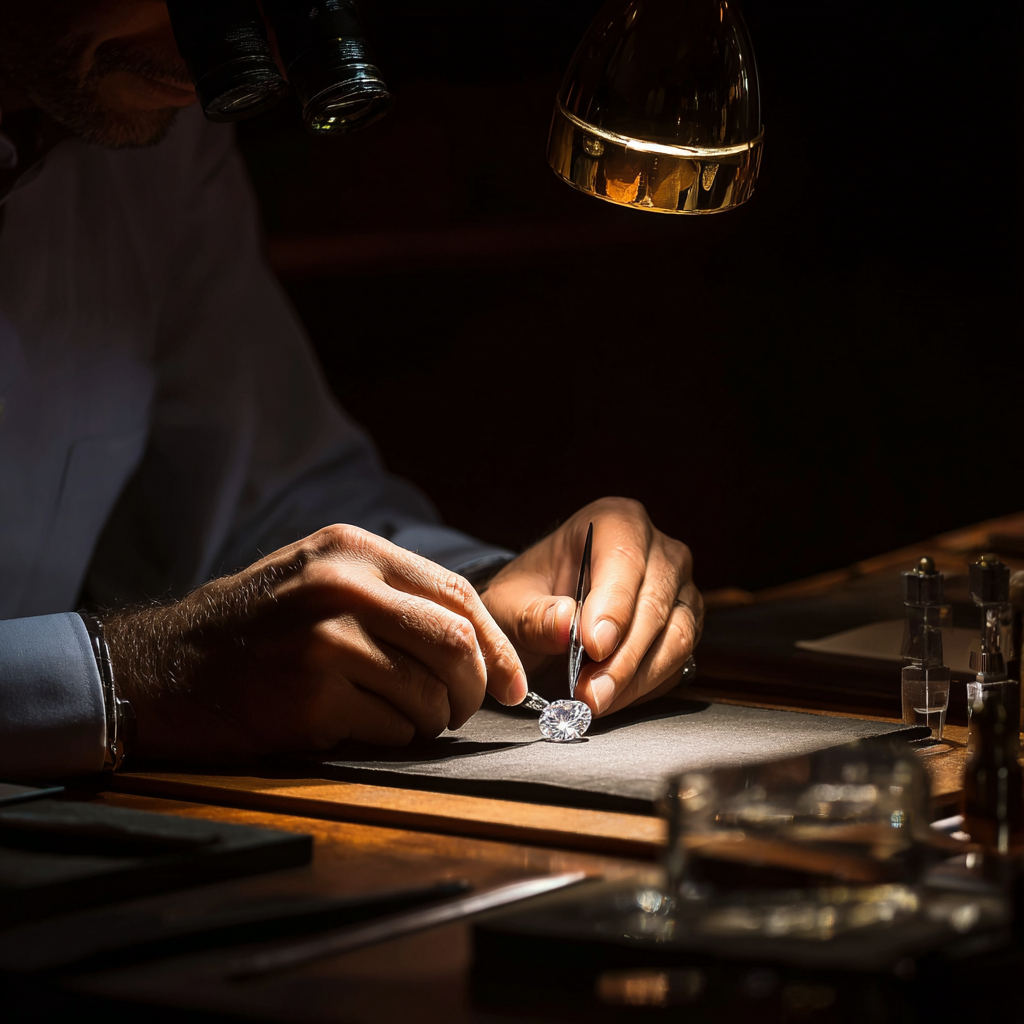
A fair valuation is not a number pulled from a chart. A trained gemologist looks at several things at once: the quality of the stones, the maker if the piece is signed, the era and craftsmanship, the condition, and the current market. A signed Art Deco bracelet is not valued the same way as a loose modern diamond, and neither is valued by weight alone.
This is the heart of the matter. A piece can be worth far more than the sum of its materials. A signed Cartier or Van Cleef piece, an antique cut diamond, a period piece in original condition, these carry value that a scale cannot measure. Knowing the difference is the entire job.
Know the difference between a buyer and a quick buyer
There is a real divide in this business. On one side are operations built for speed: cash for gold, instant offers, jewelry valued by melt weight and turned over fast. For a broken chain with no other value, that may be all a piece warrants.
But for anything that might be signed, antique, or collector-grade, a melt-value buyer is the wrong door. They are not equipped to recognize what makes the piece special, which means they cannot pay you for it. The value walks out with you, unnoticed.
A fair buyer looks like the opposite. Expertise to recognize what a piece actually is. Transparency about how the valuation was reached. No pressure to decide today. Insured handling from the moment the piece is in their care. And a free return, at their expense, if you choose not to sell. If any of those are missing, keep looking.
What it should feel like
Selling an important piece should feel less like a transaction and more like a consultation. You should leave understanding what you have, whether or not you sell it. Many people come to us simply to learn what a piece is worth, and that is a conversation we are glad to have, with no obligation attached.
For nearly a century, families, collectors, and the trade have brought us their most important pieces, some to sell, some to understand, some to settle an estate with care. We evaluate every piece the same way: privately, by a trained gemologist, with a fair and honest assessment. You can bring a piece to us in person on 47th Street, or we will send you an insured kit to mail it safely. Either way, the evaluation is free, and the decision is always yours.
If you have inherited a piece and want to know what it is, that is exactly where we can help.